Presets · WebGL
Cymatic Plate
Watch Cymatic Plate live in the browser
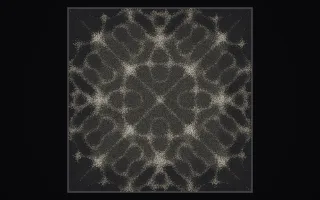
A square plate seen from above, dusted with pale sand. Where the plate shakes, the grains are pushed away; where it stands still, they gather into thin lines. These are the figures Ernst Chladni made visible in the 1780s by bowing sand-covered metal plates.
Here the plate vibrates in two modes at once, each of the form cos(nπx)·cos(mπy) − cos(mπx)·cos(nπy). The bass picks the numbers of the low mode and the treble those of the high one, so the figure redraws itself as the mix changes. The sand is simulated: every frame each grain slides downhill toward the nodal lines.
What it reacts to
- Bass: sets the low vibration mode, so the coarse figure follows the low end
- Treble and upper spectrum: blend in a finer, higher mode and change its pattern
- Mids: shift the second index of the low mode
- Kick drum: tosses the sand up, and it settles into the current figure
- Overall loudness: grains slide faster and the sand glows brighter
Tune
Grain size sets how coarse the sand looks, Shake sets how hard the vibration and the kicks scatter the grains, and Sand picks the grain colour.
Music that suits it
Music that swings between deep bass and bright highs changes the figure most, and a clear kick, as in house or beat-driven downtempo, keeps tossing and resettling the sand.
How to play it
Install Deus, play music on Spotify, YouTube Music, Yandex Music or any other tab and click the Deus icon on that tab. Then pick Cymatic Plate in the WebGL presets, or press ← → on the page until it comes up.